The most common source of frustration during a pool build is not the work itself. It is the gap between what homeowners expect the schedule to feel like and what construction actually looks like day to day. Setting that expectation honestly at the start prevents most of the anxiety later.
Before anything happens in the yard, there is a planning and permitting phase. Layout is finalized, the design is confirmed, and permits are submitted and approved. Nothing visible occurs during this stretch, and its length depends largely on the local approval process rather than on us. It is genuinely productive time, because changes made on paper cost nothing while changes made after excavation cost a great deal.
This is also the phase where your decisions carry the most leverage. Moving the pool three feet on a drawing takes minutes. Moving it three feet after the hole exists means re-excavating, re-establishing grade, and revisiting anything already coordinated around the original location. If you are undecided about a feature, a depth, or a deck edge, this is the moment to work through it rather than to defer it.
Then comes the fastest and most dramatic phase. Layout is marked, excavation begins, and within a matter of days a hole exists where a lawn used to be. Homeowners often expect the rest of the project to move at that same pace. It will not, and that is not a warning sign. Digging is the one step where enormous visible change happens in a very short window.
Excavation also produces the least attractive week of the entire project, and it is worth being prepared for it. There will be a large volume of displaced soil, equipment tracks, and a yard that looks considerably worse than when you started. This is normal and temporary. Some of that soil may be graded back on site and some may be hauled away depending on the plan, and the yard is restored near the end rather than continuously along the way.
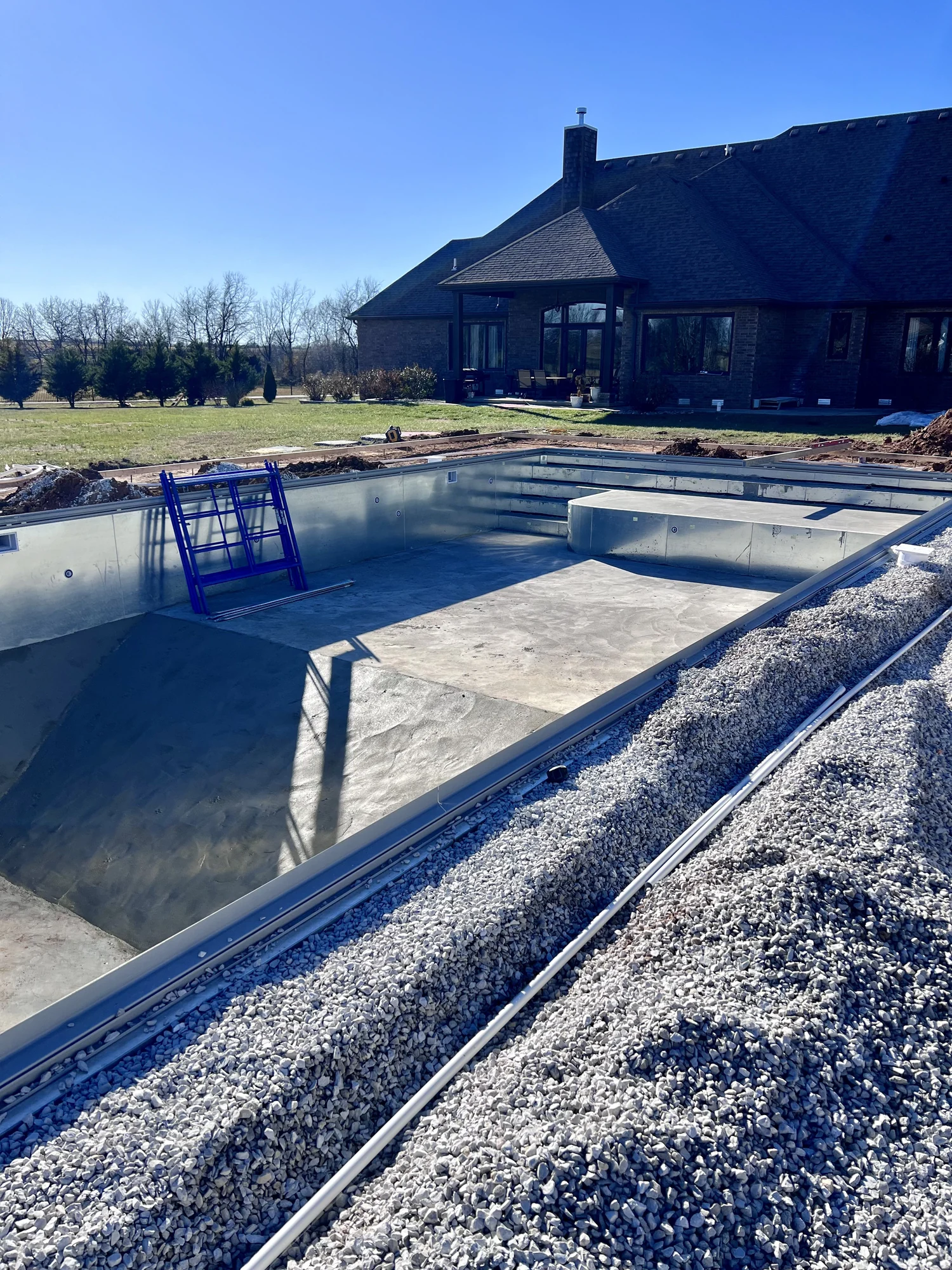
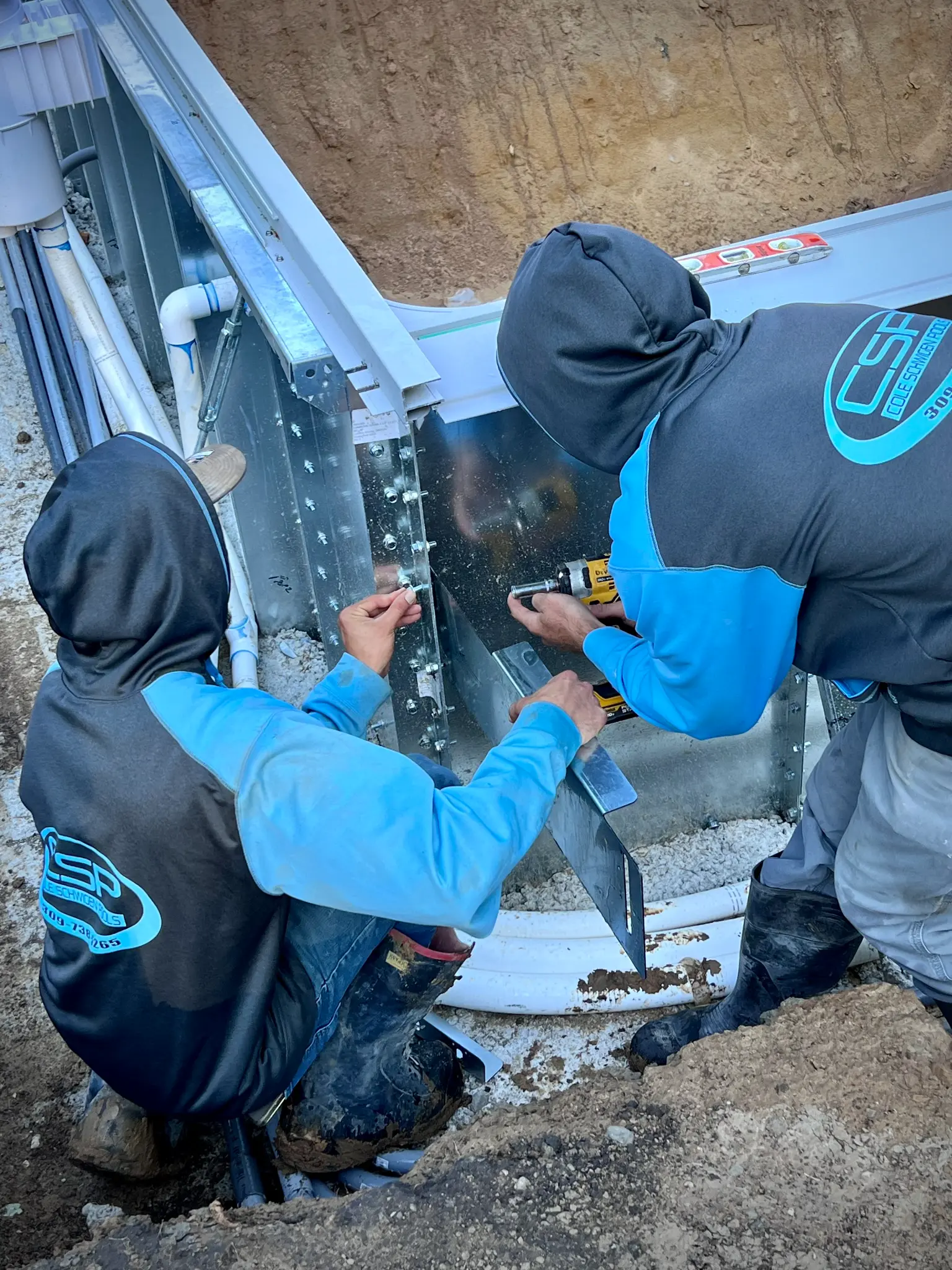
Structural work follows: setting the pool structure, bracing it, and getting everything true and level. This step rewards patience heavily. Every finish that comes later sits on top of these measurements, so time spent verifying alignment here is time you never have to spend correcting problems later.
It is fair to wonder why a crew appears to spend so long measuring and adjusting during this stage. The reason is cumulative. A structure that is slightly out of level does not stay a small problem. It carries into the waterline, the coping, the deck transitions, and the interior finish, and each of those is more expensive to correct than the alignment that caused it. Time spent with a level here is the cheapest time in the entire schedule.
Plumbing and electrical rough-in come next, and this is the phase that looks least impressive relative to its importance. Lines are run, returns and skimmers are set, conduit is placed, and everything is pressure tested. Almost all of it disappears permanently under concrete and backfill. It is also the phase where shortcuts cause the most expensive future problems, which is exactly why it is not rushed.
Pressure testing deserves a word, because it is the step that protects you from the worst category of future repair. Lines are pressurized and monitored before they are covered, so that any weakness is found while it is still reachable. A leak discovered at this stage is a minor fix. The same leak discovered after decking is poured means locating it under finished concrete and opening the surface to reach it. This is the clearest example of a quiet step that saves an owner thousands of dollars they will never know about.
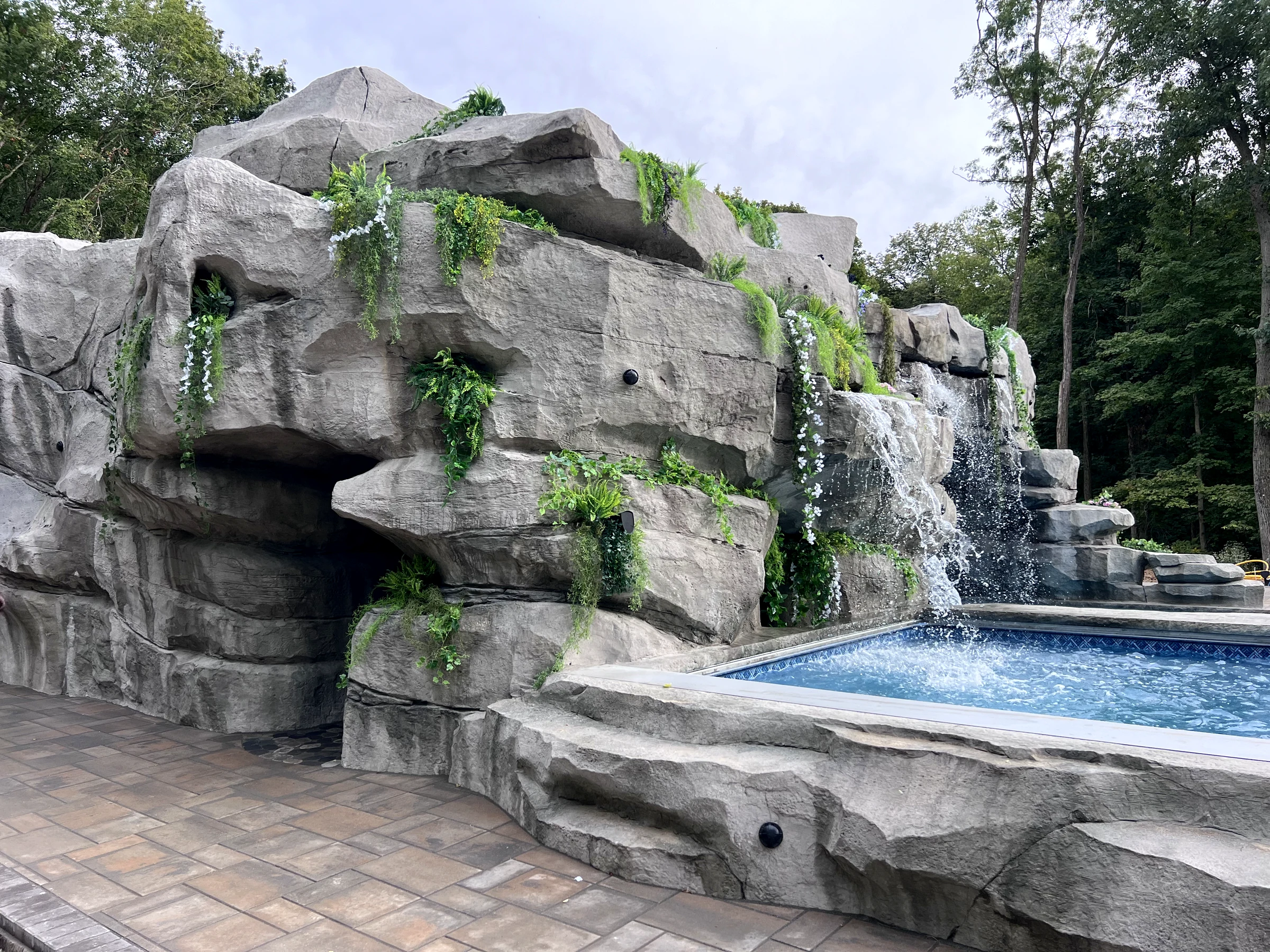
If your project includes artificial rock or water features, this is where the sculpting work happens, and it operates on its own rhythm. Steel is formed, concrete is applied, and the surface is carved and colored in stages with cure time between them. This is skilled hand work that cannot be compressed without showing in the final result, and weather affects it more than almost any other phase.
Rock work is also the phase where you may see fewer people on site rather than more, and that can be misread as a slowdown. Sculpting and coloring are specialist tasks performed by a small number of skilled hands, not work that goes faster by adding bodies. Between applications there is required cure time during which the correct action is to wait. A quiet day during rock work is frequently the plan rather than a delay.
Then comes decking and concrete, followed by interior finish, filling, chemical startup, and equipment commissioning. Concrete work is weather dependent and needs proper cure time before it takes traffic. Startup is not simply turning things on: water is balanced, equipment is verified under real operating conditions, and the system is tuned. Final grading, fencing, and cleanup close out the project.
Startup is more involved than most owners expect and it is worth participating in. Water is brought into balance from a fresh fill, circulation and filtration are verified under actual load, heaters and automation are checked in operation, and the system is tuned rather than simply switched on. It is also the best opportunity you will have to learn your own equipment while someone experienced is standing next to it. Ask your questions during startup rather than in July.
Two realities are worth accepting in advance. First, weather governs the schedule more than anything else, particularly for excavation, concrete, and rock work. A wet stretch stops progress regardless of how motivated everyone is. Second, inspections happen at defined points and cannot be worked around. A build that waits a day for an inspector is a build being done correctly.
On weather specifically, the honest framing is that a Midwest build has a rain allowance built into reality whether or not it appears on a calendar. Saturated ground cannot be excavated cleanly, concrete cannot be placed and finished properly in the wrong conditions, and sculpted rock cannot be colored in a downpour. A crew that stops for weather is protecting the quality of what you are paying for. A crew that pushes through it is creating a defect you will look at for years.
The most useful thing you can do as an owner is ask what phase you are in and what has to be true before the next one starts. Progress you cannot see from the patio door is still progress, and understanding the sequence turns a quiet week from a worry into an expected part of the process.
Want project guidance that takes the full ownership experience into account?
Start a conversation