Closing a pool in this part of the country is not a formality. The Quad Cities gives us a real freeze, and more importantly it gives us repeated swings across the freezing line through the winter. Water that gets into the wrong place and expands does not simply cause an inconvenience. It cracks things. Almost every expensive spring surprise traces back to a step skipped in the fall.
The physics behind that is worth understanding, because it explains why the details matter so much. Water expands as it freezes, and it does not care what is containing it. Inside a sealed pump housing, a heater passage, or a length of pipe with no room to give, that expansion becomes force applied directly to the housing wall. Materials that handle water pressure all season long are not designed to resist ice forming inside them. This is why the goal of a proper close is not to protect against cold in general, but to remove water from the specific places where freezing does structural damage.
Start with water chemistry, which is the part people are most tempted to skip because the pool is about to be covered anyway. That reasoning is backwards. Water sits against your surfaces and equipment for months without circulation. Water that is out of balance going into winter has an entire off-season to stain, scale, or etch whatever it is touching. Balancing before you close is far cheaper than resurfacing later.
For the chemistry itself we use the Patriot line, which is the professional-grade sanitizer, balancer, algaecide, and clarifier program carried exclusively by Central Pool Supply here in the Quad Cities. The reason we name a specific line rather than staying vague is that consistency matters more than brand loyalty. Water responds better to one coherent program than to a mix of whatever products happened to be on the shelf, and staying on one line makes it far easier for someone to diagnose your water when something looks off.
Think of winter chemistry as a long exposure rather than a daily reading. During the season, water moves constantly, gets tested, and gets corrected. During the off-season it sits still against every surface it touches for months with no circulation to moderate it. Water that is slightly aggressive in August is a minor correction. The same water sitting undisturbed until April has had months to work on your finish. Closing with balanced water is the least expensive form of surface protection available to you.
Then comes the part that actually protects your investment: getting water out of the places where freezing does structural damage. Lines are cleared and sealed, equipment is drained, and the water level is set appropriately for the closure method being used. Any water left standing in a return line, a pump housing, a heater, or a filter has the entire winter to find a freeze cycle. A cracked heat exchanger or a split pump housing is an expensive lesson in a step that took minutes to do properly.
Equipment deserves individual attention rather than one blanket procedure. Pumps, filters, heaters, chlorinators, and automation each have their own drain points and their own vulnerabilities, and automatic covers have their own requirements as well. This is the stage where a written checklist genuinely matters, because it is very easy to drain four things correctly and forget the fifth.
Write that checklist down once and keep it with your equipment records. Every pool has slightly different plumbing, slightly different equipment, and its own set of drain points and shutoffs. Trying to remember the sequence from last October while standing outside in the cold is exactly how something gets missed. A short list specific to your system, refined a little each year, is one of the most valuable ownership documents you can have, and it is equally useful if someone else ever has to close the pool for you.
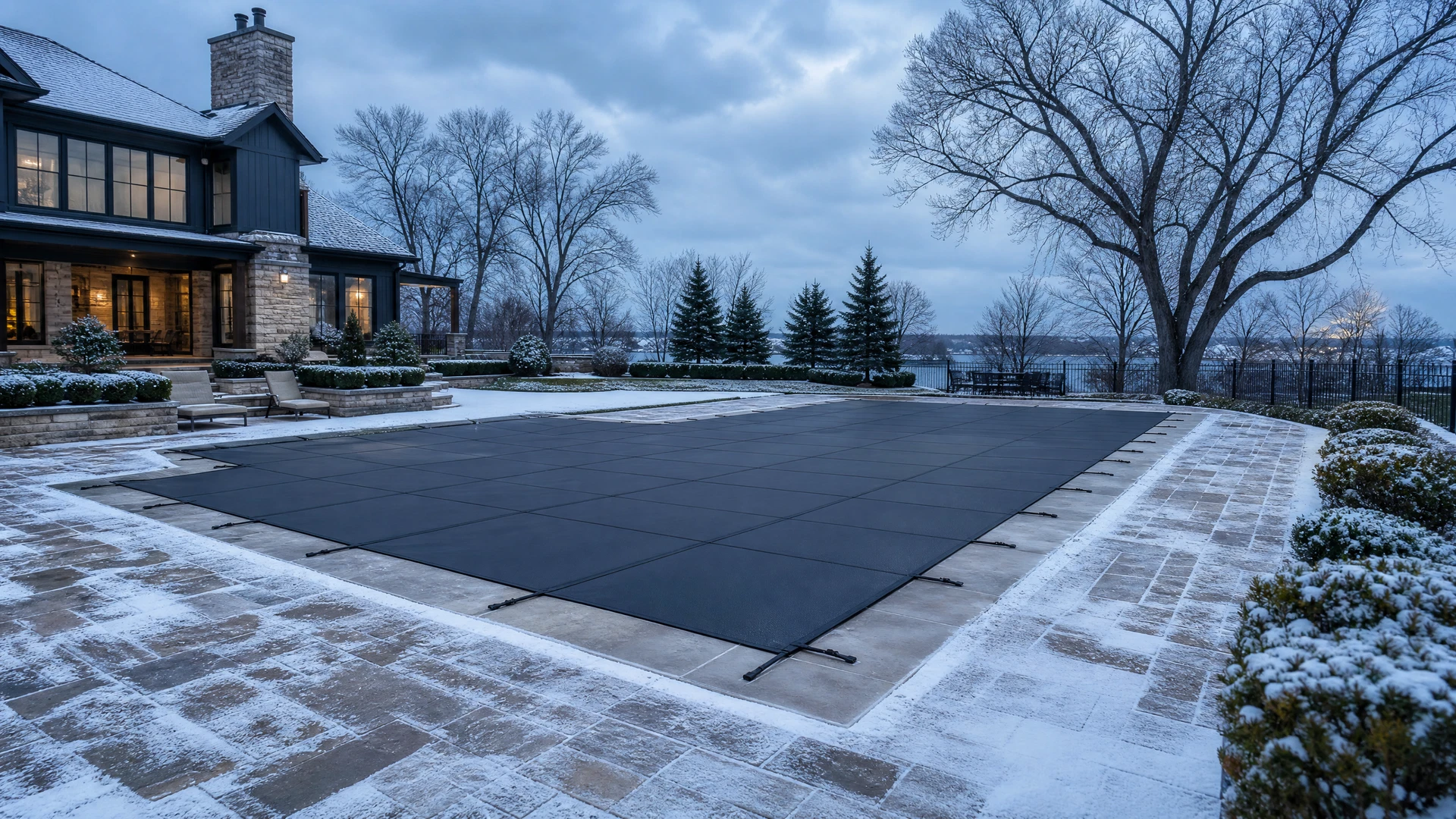
Cover selection and installation matter more than most owners expect. A cover that fits poorly or is not secured will collect debris, allow sunlight through, and can be damaged by wind and snow load. A properly fitted and secured cover keeps the water cleaner, protects the surface, and makes opening in spring dramatically easier and cheaper. It is also a safety item during months when nobody is watching the backyard.
Closing well also pays a direct dividend in April, which is the argument most likely to actually motivate people. A pool that was balanced, drained correctly, and covered properly opens as a straightforward process. A pool that was closed carelessly opens as a project: cloudy or stained water that takes weeks and a significant volume of chemicals to recover, plus whatever equipment did not survive the winter. The fall work is measured in hours. The spring consequence is measured in weeks and repair invoices.
One more thing worth doing before the cover goes on is a slow walk around the whole system while it is still accessible. Note anything that looked marginal during the season: a fitting that seeped, a light that flickered, a pump that ran louder than it used to, a section of coping that moved. Winter is the right time to schedule those repairs, when nobody is competing for the calendar. The same request in May lands in the busiest weeks of the year.
The mistakes we see repeat every year are consistent: leaving water in equipment, closing with unbalanced chemistry, using a cover that no longer fits properly, and treating a mild early winter as permission to delay. That last one is a Midwest specialty. A warm stretch in November does not mean the freeze is not coming.
If you are not confident about any part of the process, ask before you guess. A short conversation in October is far less expensive than a repair in April, and there is no penalty for wanting to understand what you are doing to your own pool.
Want project guidance that takes the full ownership experience into account?
Start a conversation